Everything About Bar Version Illustration Techniques: Transforming Complex Math Issues Into Easy Visuals
Bar model attracting techniques use a sensible approach to recognizing complex mathematics issues. By representing numbers and their partnerships with simple rectangle-shaped bars, trainees can imagine operations like enhancement, division, subtraction, and reproduction. This technique not just enhances understanding yet likewise fosters essential assuming abilities. As educators discover the benefits of bar versions, they may reveal new techniques to engage learners in maths. What understandings can these methods offer in real-world situations?
Comprehending the Bar Design Idea

The bar design promotes critical reasoning by urging students to picture problem-solving procedures. It enables them to recognize missing values via relative analysis of the sizes of benches, making abstract concepts substantial. This methodology is specifically efficient for more youthful students who may deal with numerical depictions alone. As a result, the bar design cultivates a strong foundational understanding of mathematics, enhancing total problem-solving skills and promoting confidence in dealing with numerical procedures.
Just How to Develop Bar Designs for Addition and Reduction
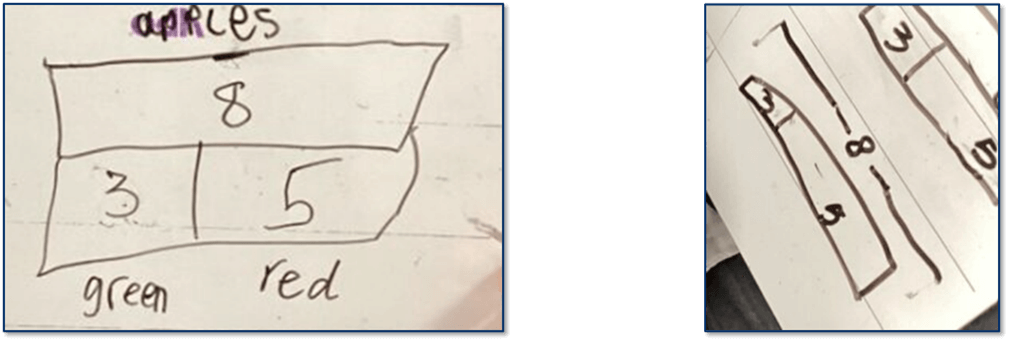
To successfully develop bar models for addition and reduction, one must first recognize the quantities entailed in the problem. This includes acknowledging the overall amount, along with the private parts that add to that total. For addition, the model generally consists of two bars representing the separate amounts, with a third bar showing their combined amount. Each bar's size should match to its numerical worth, making it easy to envision the relationship in between the amounts.
In subtraction, the model is a little various; it includes one bar for the total amount and one more for the amount being deducted. The remaining part can be stood for as a different bar, illustrating the difference. By plainly classifying each bar with its matching worth, the design comes to be an effective visual tool. bar model drawing techniques. This approach not only aids in understanding the procedures yet also enhances analytical skills, making mathematics much more obtainable to students
Using Bar Versions for Multiplication and Department
Bar versions work as powerful devices for imagining multiplication and department, simplifying intricate troubles into convenient components. By representing amounts with rectangle-shaped bars, students can easily comprehend relationships in between numbers. In reproduction, a bar version can show the concept of groups, where one bar stands for the complete amount and smaller sectors stand for private teams. A design might reveal 4 teams of 3, with the complete size of the bar showing 12.
In division, bar models successfully portray the circulation of an overall amount into equivalent components. A solitary bar can represent the total number being separated, with sections showing the equivalent parts created. This graph assists pupils comprehend the concept of segmenting or sharing. Overall, using bar designs for these operations boosts understanding by transforming abstract computations right into concrete visuals, permitting students to visualize the connections between divisors and multiplicands effectively.
Fixing Word Troubles With Bar Versions
Word problems can often pose obstacles for students, making it difficult to identify the necessary procedures to solve them. Bar versions act as a valuable device in this situation, changing complicated situations right into clear aesthetic depictions. By segmenting information into bars, students can much better recognize connections and quantities included in the issue.
When faced with a word trouble, learners can begin by determining key components here such as overalls, components, and the connections in between them. Each aspect can be illustrated utilizing unique bars, permitting pupils to visualize the problem's framework. This approach promotes logical reasoning, making it possible for learners to determine which mathematical operations to apply.
For example, when dealing with enhancement or subtraction, bench model can represent the entire and its parts, while for reproduction and department, it can delineate equivalent groups. On the whole, bar versions simplify the analytical process, making it much more obtainable for pupils to show up at the proper services.
Tips for Mentor Bar Design Techniques Successfully
Effective teaching of bar model methods can considerably improve trainees' understanding of mathematical concepts. To achieve this, instructors ought to start by introducing the basic principles of bar versions, making sure that students grasp the relationship between amounts represented visually. Clear, step-by-step demos during lessons can help demystify the process, fostering self-confidence in pupils as they learn to use these methods.
Urging joint group work can additionally be valuable, as pupils can share ideas and techniques, reinforcing their understanding with peer interaction. Educators must offer a variety of method problems, progressively raising complexity to challenge trainees without frustrating them. Utilizing real-life situations can make the problems more relatable, improving involvement.
Normal comments is essential; educators must give useful criticism that overviews trainees in fine-tuning their skills. Integrating innovation, such as interactive software or on-line resources, can offer added assistance and technique opportunities, strengthening pupils' understanding of bar versions.
Real-Life Applications of Bar Version Drawing
While numerous students originally see bar design drawing as a classroom tool, its applications expand much past scholastic settings into daily life. This technique can simplify budgeting, enabling people to picture earnings and costs clearly. By damaging down financial components into bars, one can conveniently recognize costs patterns and save more properly.
Additionally, bar versions aid in planning and arranging jobs. When handling time for various activities, people can represent each task with a bar, providing an aesthetic review of top priorities and time allocation.
Regularly Asked Concerns
Exactly How Do Bar Versions Assist With Students' Problem-Solving Abilities?
Bar versions improve pupils' analytical skills by offering a graph of mathematical relationships. This clarity aids them understand complicated principles, facilitates rational thinking, and sustains the growth of effective approaches for tackling different problems.
Can Disallow Models Be Made Use Of for Geometry Problems?
Bar designs can certainly be utilized for geometry issues, helping trainees in visualizing relationships between shapes and dimensions. They help with understanding of principles such as location, boundary, and spatial thinking in an organized manner.
Are There Details Software Program Equipment for Creating Bar Designs?
Yes, a number of software program devices exist for developing bar designs, consisting of Microsoft PowerPoint, Google Slides, and specialized math applications like Mathigon and GeoGebra, which help with the visualization of mathematical principles with interactive and adjustable bar representations.
What Age Team Perks Many From Bar Model Techniques?
Children aged 7 to 12 benefit most from bar model techniques (bar model drawing techniques). This age, commonly discovering foundational math principles, finds aesthetic depictions particularly handy for recognizing connections between numbers and solving intricate issues extra properly
Exactly How Can Parents Assistance Bar Version Learning in the house?
Parents can sustain bar model discovering by providing visual aids, involving in discussions concerning analytical, encouraging practice via video games, and strengthening principles with day-to-day instances, making math satisfying and relatable for their youngsters.
For addition, the design usually is composed of two bars standing for the different amounts, with a 3rd bar indicating their integrated amount. In multiplication, a bar version can highlight the principle of groups, where one bar represents the complete quantity and smaller sized segments represent specific groups. To accomplish this, instructors need to start by introducing the essential principles of bar designs, making certain that pupils grasp the partnership between amounts represented visually. Bar models improve students' problem-solving skills by giving an aesthetic depiction of mathematical partnerships. Bar models can indeed be used for geometry problems, assisting students in picturing partnerships in between measurements and forms.
Comments on “Strengthen math visualization skills using bar model drawing techniques effectively”